DESIGNATHON 2026 – celebrating our winners!
Student teams developed their Autodesk Fusion skills, learned new workflows and collaborated to prepare their submissions for Designathon 2026. They were asked to respond to a design brief for a mobile hygiene unit for use in disaster recovery settings.
The entries were fantastic – demonstrating both creativity and understanding of the brief. 190 teams from 133 educational institutions across 20 countries submitted entries.
About the winners
First place – Poyraz Akçoru, Muhammed Molla and Alptekin Polat Eken from Team Design Conflict, Gazi University, Türkiye
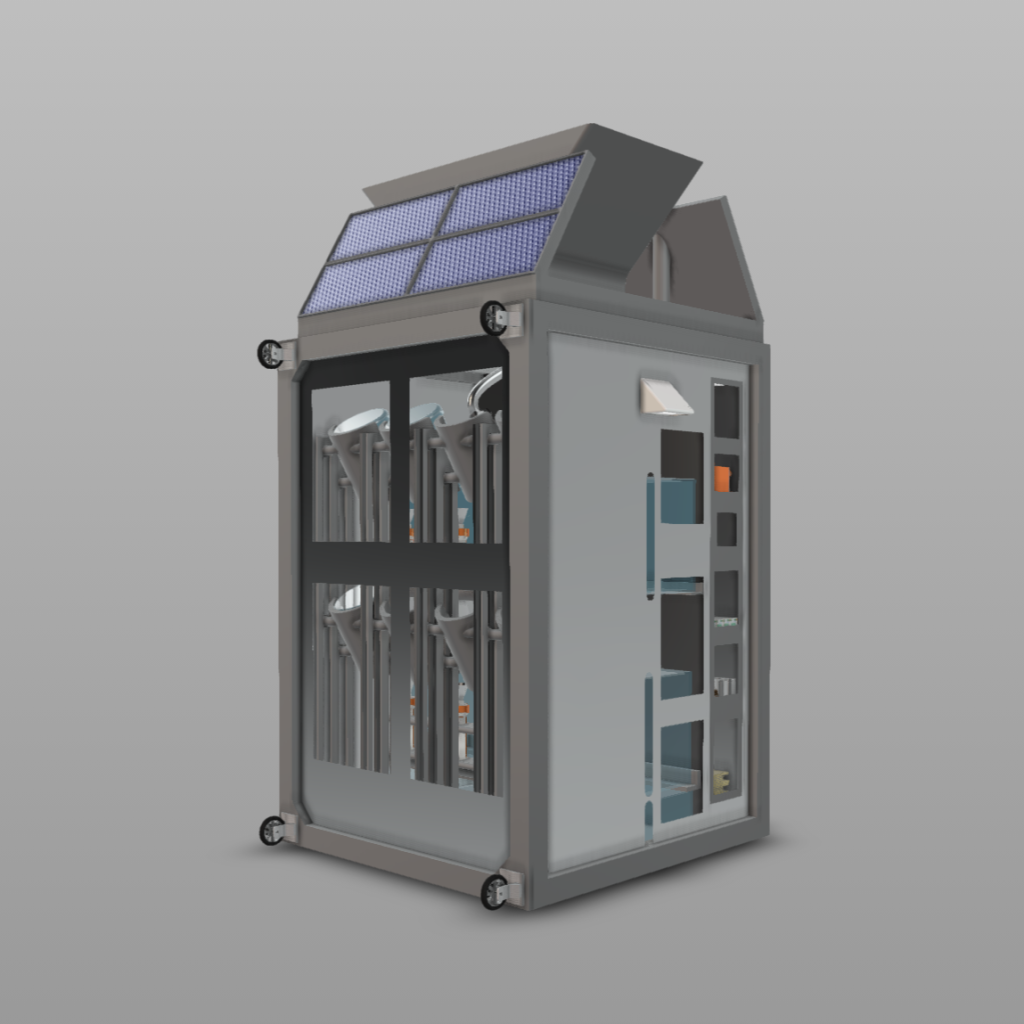
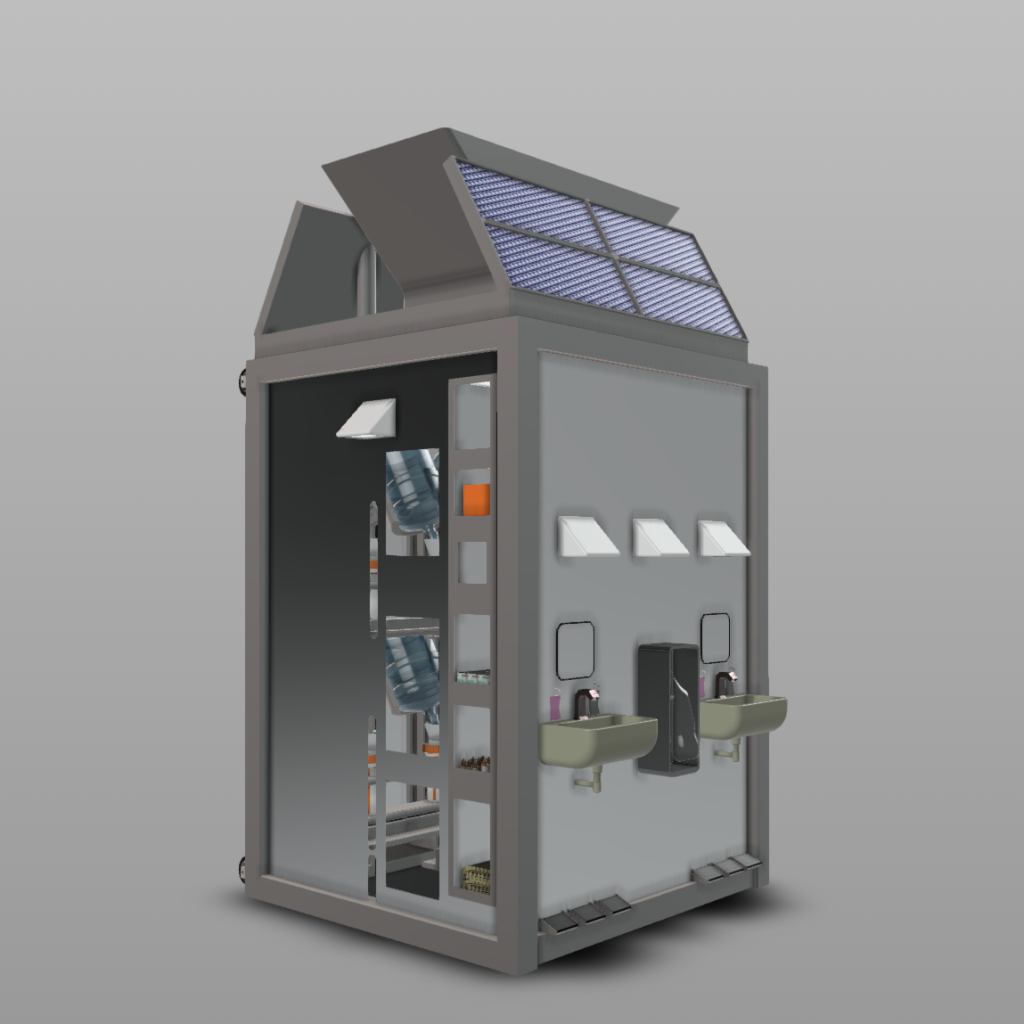
Describing their entry, the team said:
Thanks to the two faucets located on one side of the station, along with the adjacent soap and disinfectant, people can maintain their hygiene when needed by pressing the foot pedals below. Furthermore, this disinfectant reservoir allows them to clean the affected area in the event of a potential injury.
Night lighting will be provided by the solar panels located on top of the station. In addition, falling rain will be channelled into the purification system through the funnel situated in the middle of these panels. Additionally, any potentially contaminated water sources found nearby can be stored in these bottles to feed the purification system, even if it does not rain.
Disasters negatively affect not only us humans but also the animals in the region. For this reason, reservoirs have been included to meet the water needs of animals as well. Thanks to the compartment in the station designed for filling water into plastic bottles, people will be able to quench both their own thirst and that of our animal friends.
Comment from the jury about this year’s winner:
We selected this project as Designathon 2026’s overall winner for its exceptional level of detail and comprehensive response to the challenges of disaster-affected areas. The team delivered a well-developed, user-focused, and practical solution, with particular strengths in the water filtration system, integration of emergency supplies, and supporting infrastructure. Careful consideration of factors including transportation, storage and long-term operation resulted in a highly functional design.
Second place – Corné Hurter and Marco Botha from Team Dumb and Dumber, Tshwane University of Technology, South Africa
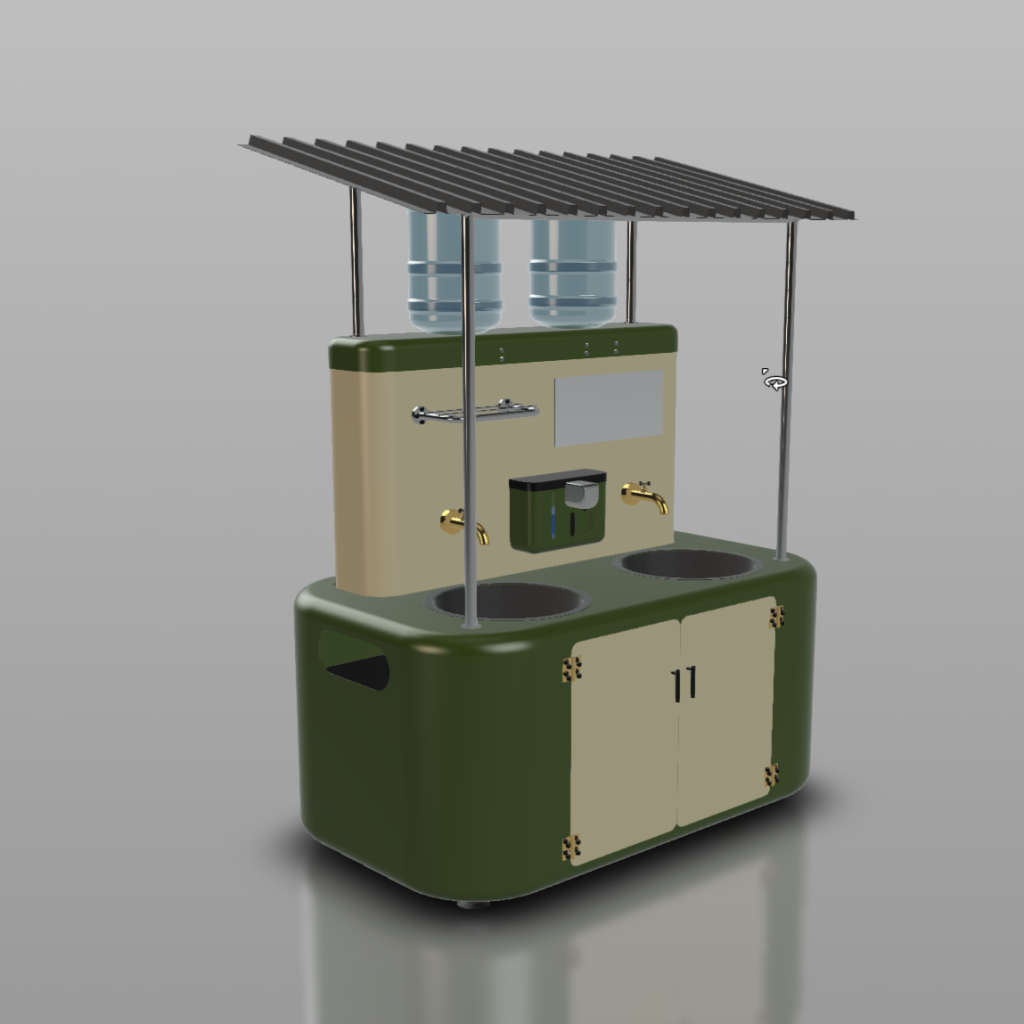
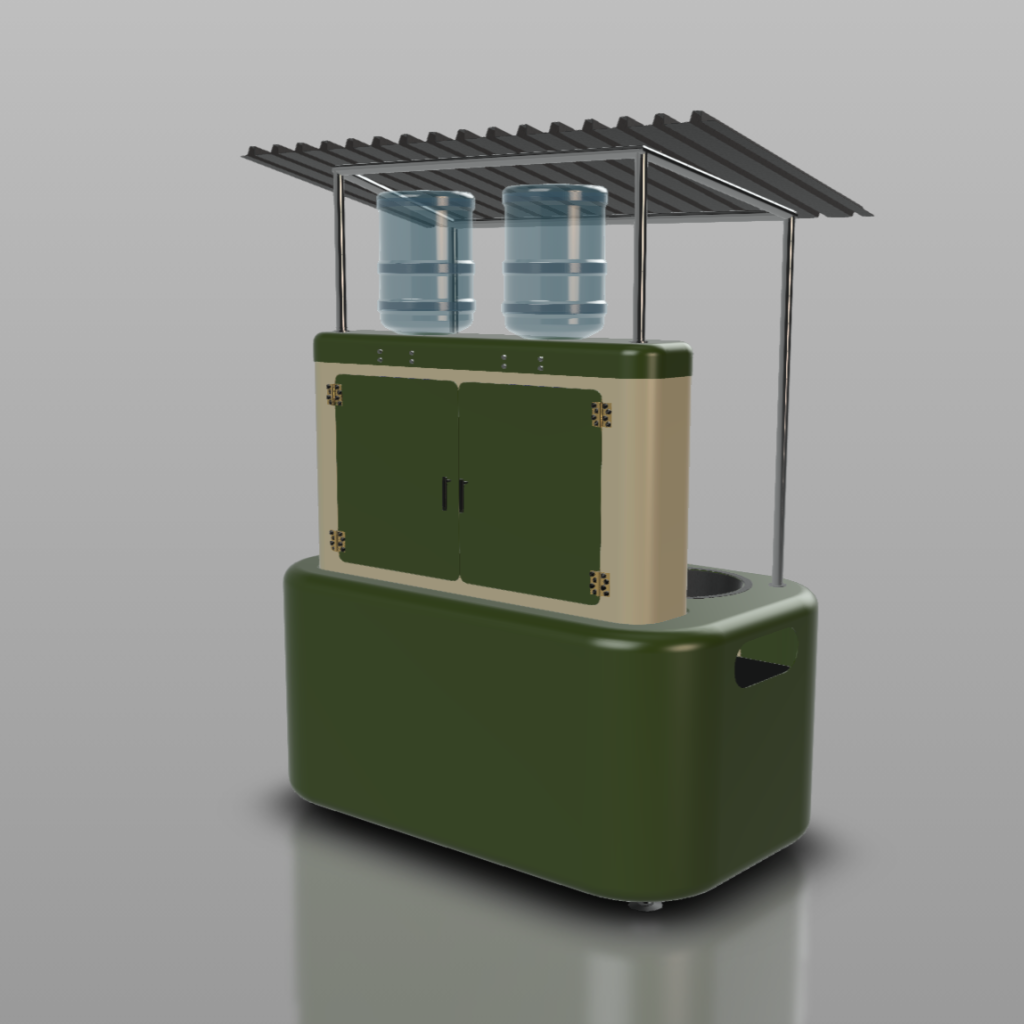
When asked about their entry, the team said:
Our design “Disaster Master” combines the main hygiene functions into one compact, self-contained station. It includes two handwashing basins and taps, a central soap or hygiene-product dispenser, a mirror, a towel rail, enclosed storage and trash collection units. The two washing points allow more than one person to use the station at a time without making the overall structure unnecessarily large.
Overall, the station responds to the brief by providing handwashing, filtered-water access and basic personal-hygiene facilities in one organised unit. Its sheltered design, protected storage and simple controls make it suitable for challenging environments where normal water and sanitation infrastructure may be unavailable.
Comment from the jury:
We selected this project for its well-balanced and practical approach to the design brief. With a simple and compact form, it successfully addresses all of the core functional requirements through clear planning and carefully modelled components. The thoughtful selection of materials and the project’s distinctive visual identity, demonstrate that a straightforward solution can still achieve both functionality and strong design appeal.
Third place – Cristina Portuguez Molina, Loren Rojas Sibaja and David Picado Ramirez from Team Colibri, Instituto Tecnológico de Costa Rica (TEC), Costa Rica
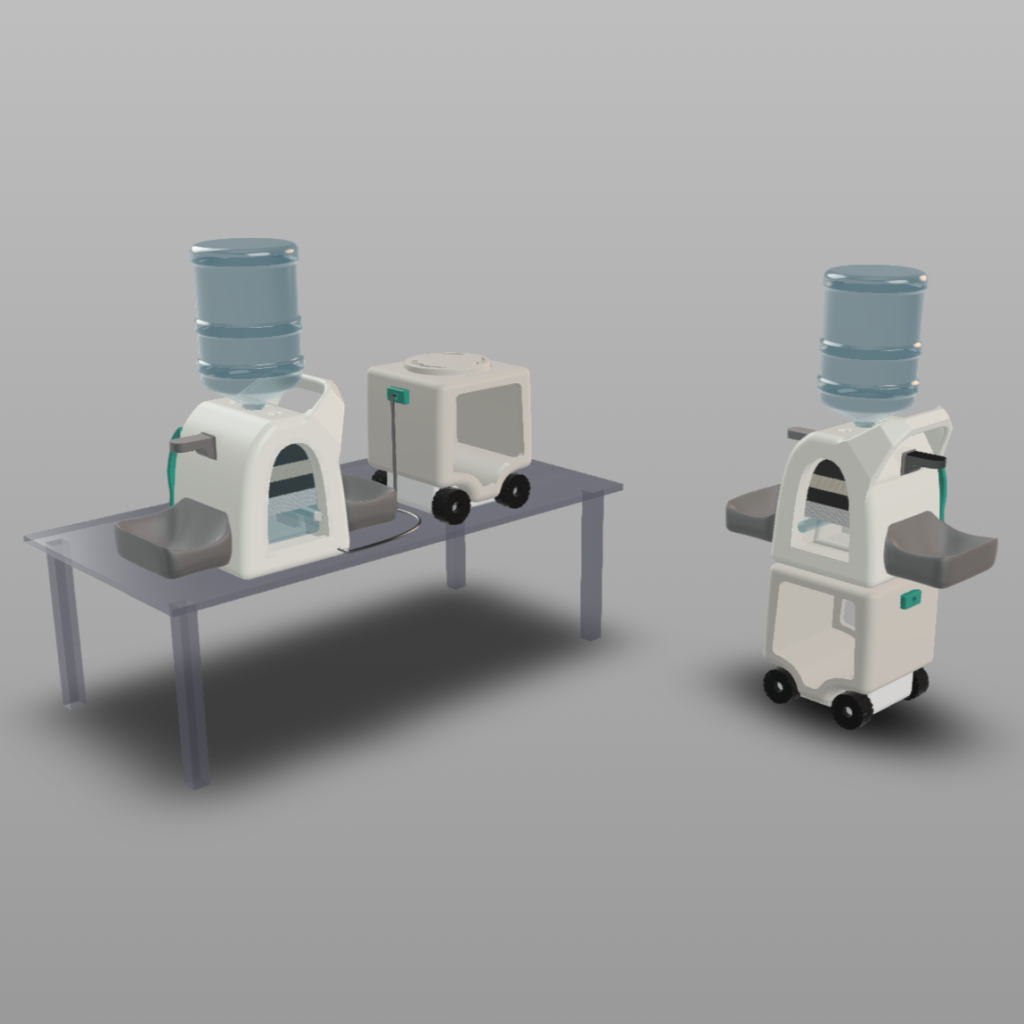
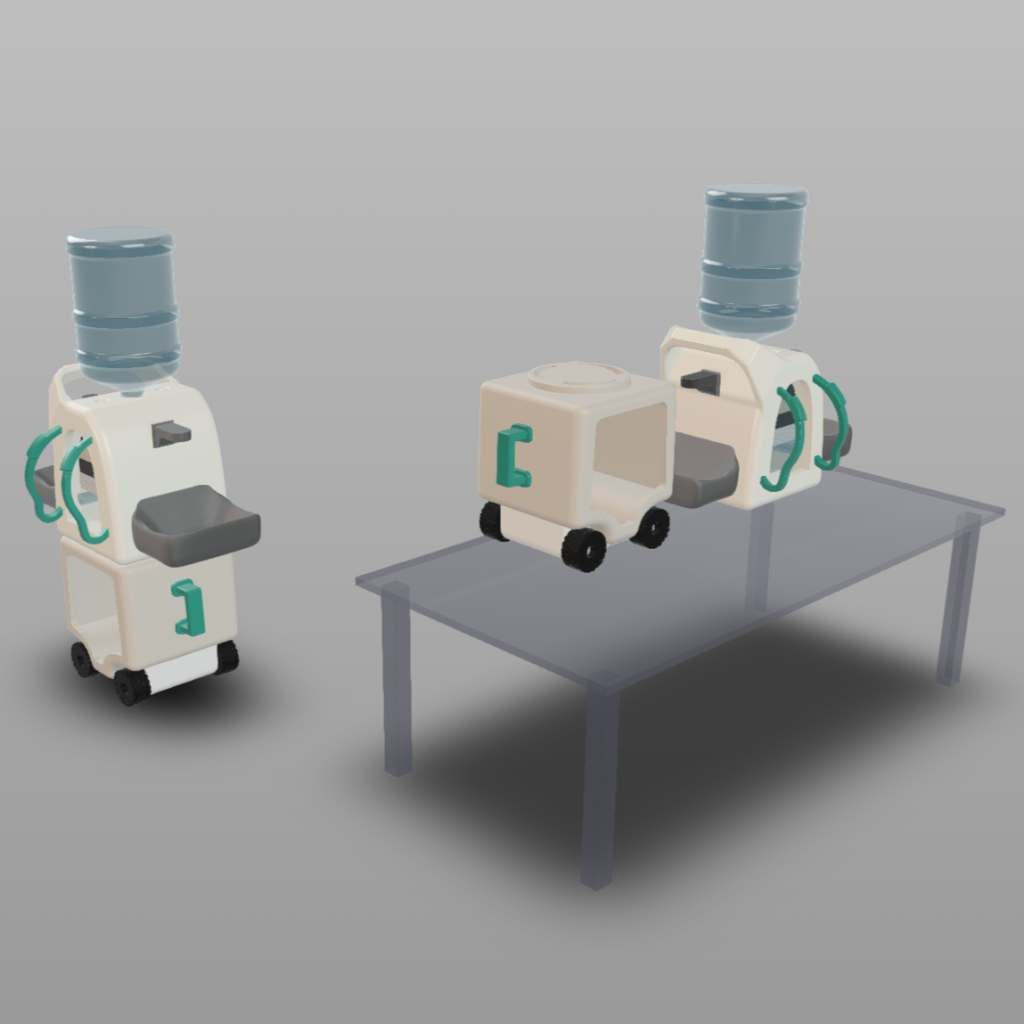
The team described their entry:
To solve the need of a rapidly deployable and sustainable hygiene station the design studio colibrí proposes the Picaflor Modular Station.
The design consists of two separate modules, the upper one contains a 4 stage gravity filter. The lower module is used as a storage area, containing the used up water. Both modules can be joined and fit with their male-female swivel coupling, allowing for multiple forms of transport that adapt to the terrain. When empty, the upper module can be moved using its lateral belts as a backpack, or by joining it with the lower module and using its handle to carry it as a suitcase. Once the destination is reached the modules can be separated and set in any table ready for use.
Comment from the jury:
This project stood out for its originality and highly distinctive concept. Its modular design, featuring separate upper and lower units, provides exceptional flexibility for transportation, deployment, and use in a variety of disaster scenarios. We noted the creative approach to portability and adaptability, showing how a unique design can remain practical while effectively meeting the functional requirements of the brief.
Wildcard award – Jacobus Arnoldus Combrinck, Christian Van Der Merwe and Lethabo Khumalo from Team Snap, Crackle & Pop, Tshwane University of Technology, South Africa
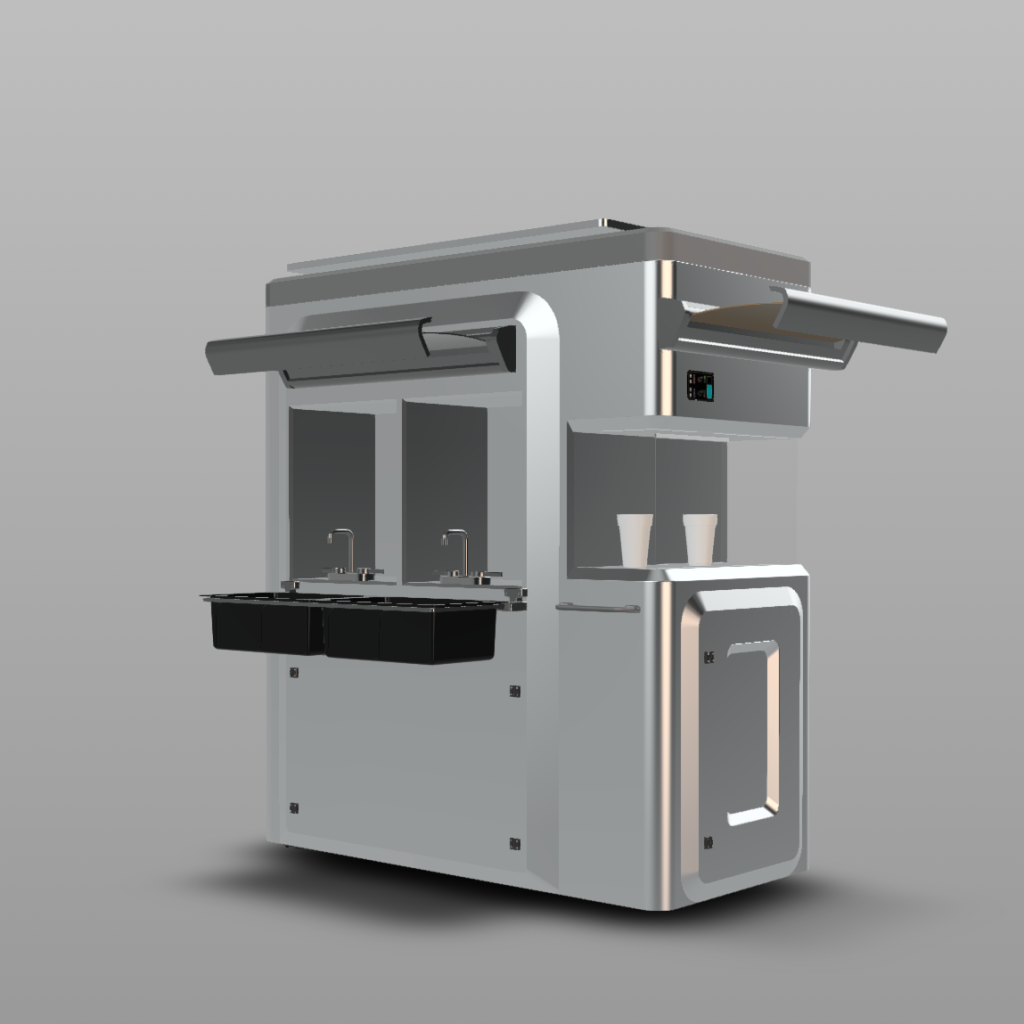
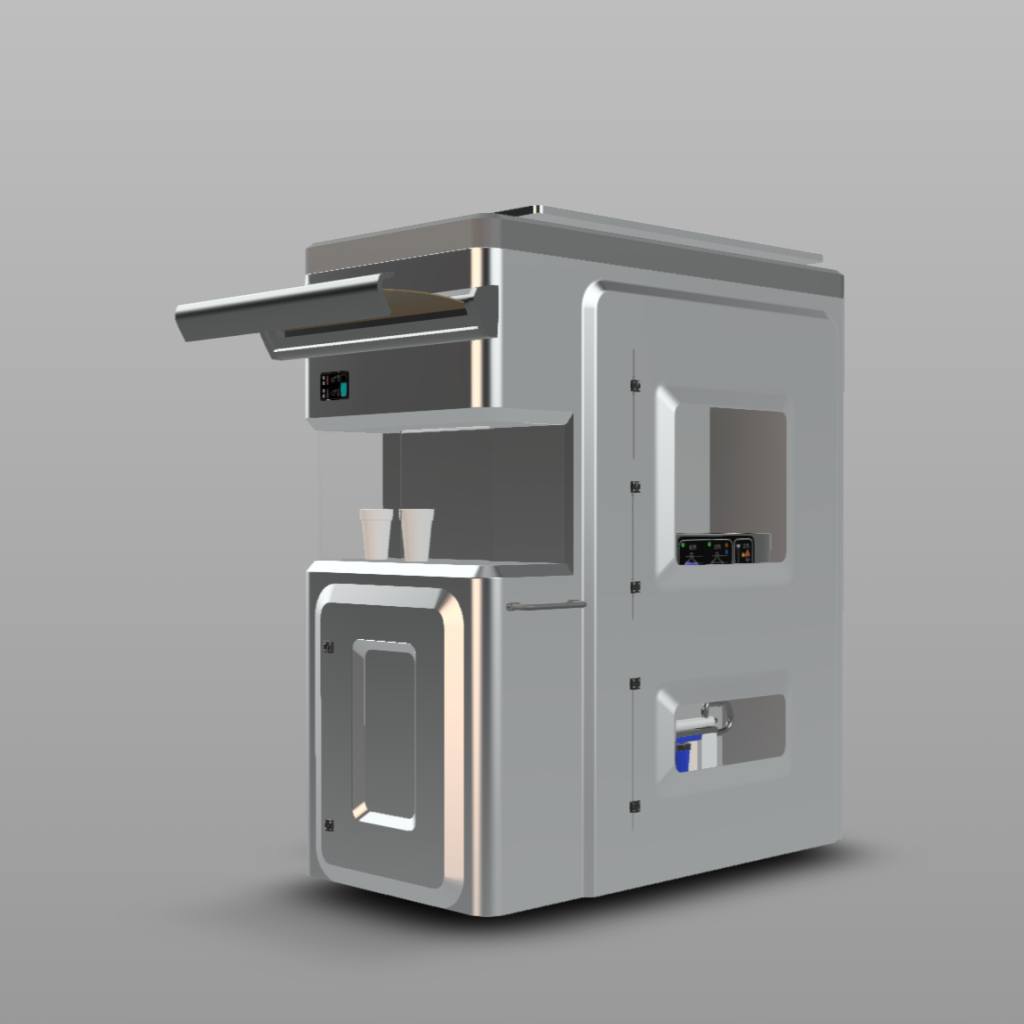
When asked to describe their submission, the team said:
We call our water dispenser the Aqua Station, it’s a solar powered hydration station designed for many environments. Its modern, sleek look makes it standout from your basic water dispenser, and comes with many features aimed to aid many users.
This dispenser will mostly be made from aluminium, meaning it can be recycled and used again. This dispenser has a built in water cooling and heating system, allowing users to have access both chilled and hot water. This makes the product useful in many different environments. To help with mobility, this dispenser has built-in wheels and handles, working almost like a wheelbarrow to move around.
The Wildcard award was selected by John Peros, who said:
I selected this project for the Wildcard Award for its forward-thinking approach to the design of a hygiene unit and its strong visual identity. The team combined a detailed and well-developed model with the integration of electronic systems, creating a concept that explores how technology can enhance hygiene infrastructure in emergency environments. Its modern aesthetic and ambitious interpretation of the brief made it a memorable entry among this year’s submissions.
Honourable mentions:
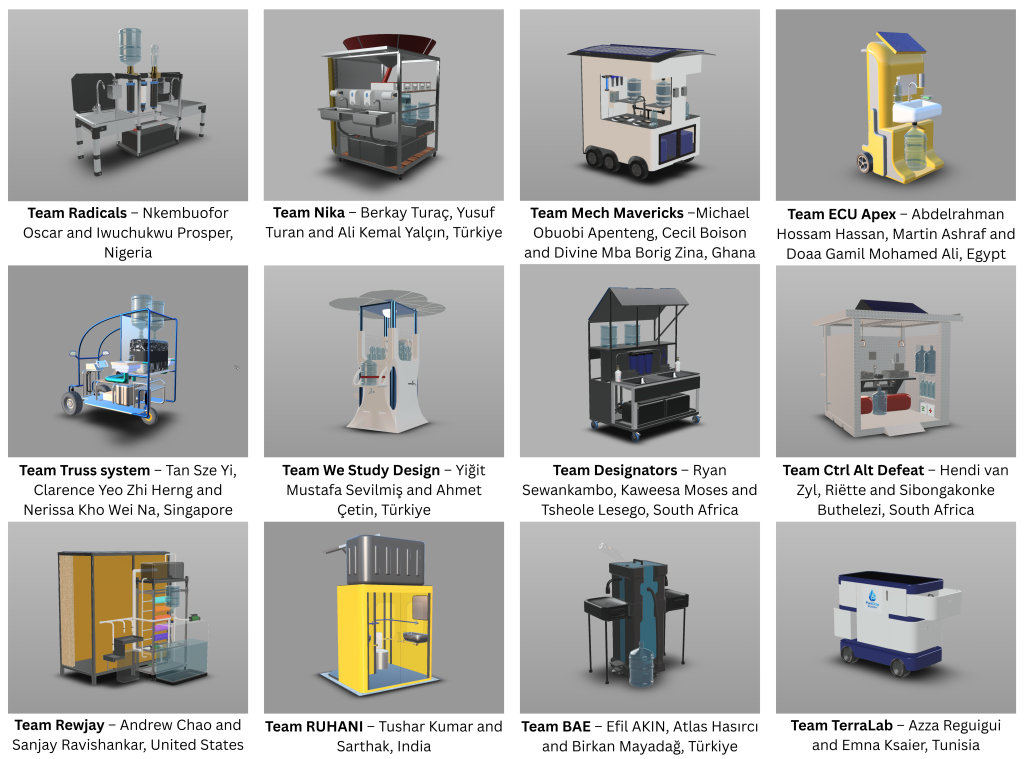
Designathon 2026: demonstrating Autodesk Fusion learning and skills
Student teams taking part in Designathon 2026 were asked to design a compact, rapidly deployable, and sustainable hygiene station where people can wash their hands, access filtered water, and maintain basic personal hygiene in challenging environments.
Student teams got to test their Autodesk Fusion skills, team-work and interpretation of the brief in their submissions. The judges evaluated the entries against three criteria: model integrity and originality; detail level and efficiency and; aesthetics and visual quality
Commenting on the Designathon 2026 and the winners, the expert jury said:
Every year we’re impressed not only by the quality of the winning projects, but by the ambition and commitment shown by every team. The Designathon gives students the opportunity to apply their technical skills to meaningful challenges while developing collaboration, critical thinking and problem-solving skills that simply can’t be learned through theory alone.
Competitions like this help bridge the gap between education and industry, giving students invaluable experience and confidence for whatever comes next. They develop skills, knowledge and behaviours employers are looking for.
Whether they take home an award or not, every team that participates develops the confidence, creativity and practical experience that will help them stand out as they begin their careers.
A huge thank you to all the students, Autodesk Learning Partners, student experts, judges and sponsors who made Designathon 2026 such a success.
What’s the Designathon?
International online design challenge for engineering and industrial design students
- Boost your Autodesk Fusion skills and learn key workflows
- Compete against student teams worldwide
- Learn and compete as a team (2–3 students per team)
- Prizes and recognition for winning teams
Boost your career
Learn new 3D design skills and get familiar with Autodesk Fusion, a platform used by manufacturers worldwide. Strengthen your CV and showcase your ideas and designs to an expert panel.
Tackle a brief
Showcase your creativity by developing solutions to a real-world challenge. Gain valuable experience, work with your team, and contribute to a more sustainable future. Be part of designing a green tomorrow.
Work with your peers
Develop your ability to work as part of a team — a key skill in any design or manufacturing environment. Bring a team together and collaborate to achieve a shared goal.
Prizes and recognition
Win an exclusive Autodesk learning experience in the UK.
The team placing first in Designathon 2026 will be invited to an in-person learning experience at the Autodesk Technology Centre in Birmingham, UK.
This is an exclusive opportunity to:
- Learn directly from Autodesk professionals
- Receive mentoring, advice, and hands-on training
- Explore how professionals design and solve real-world challenges
- Present your winning Designathon concept to Autodesk experts
The experience is provisionally planned for October 2026 and includes travel and accommodation for the winning team.
Exciting prizes will also be awarded to the 2nd and 3rd placed teams, with USD 3,000 for the runner-up team and USD 2,000 for the team in 3rd place, plus a special Wild Card award for a standout entry that impresses the judges. In addition, the 2nd place team will receive 3Dconnexion SpaceMouse Wireless devices, while recipients of the Special Mention award will receive 3Dconnexion CadMouse Pro Wireless devices.

To learn more about Designathon 2026, click here to read our FAQ.
Requirements

- You must meet Autodesk’s eligibility criteria for the Education Plan and be enrolled at a qualified educational institution at the time of the competition (technical college or university) or be enrolled in a course at an Autodesk Authorized Academic Partner.
- You must enter as a team – the minimum team size is 2 people, the maximum is 3 people
- You must participate in both days of the Designathon - and if you’re new to Autodesk Fusion, we recommend you undertake some learning prior to the event
- You will need access to a computer with an internet connection to take part
- Prior to the Designathon, you must install Autodesk Fusion by registering for the free education plan on the Autodesk Education Community
Key dates

- 03 July 2026: Registration closes
- 19 June 2026: Autodesk Fusion training
- 03 July 2026: repeat Autodesk Fusion training if you missed 19 June
- 17 July 2026: Designathon Day 1 – training and upskilling (start time: 8 AM BST)
- 18 July 2026: Designathon Day 2 – competition day (start time: 8 AM BST)
- 05 August 2026: Awards ceremony
Autodesk Fusion Designathon 2026 Training Curriculum
Training includes:
- Cloud collaboration & project data management
- Working in teams inside Autodesk Fusion Interface navigation & key workspaces
- Sketching fundamentals & constraints
- Solid modeling tools (Extrude, Revolve, Sweep, Loft)
- Surface & Freeform (organic) modeling
- Rendering & presentation skills
- Competition-style practice projects
- Submission process & final competition briefing
- Career pathways, certification & Autodesk ecosystem insights
For full curriculum details, click here.
Designathon 2026 Sponsors
Thank you to our main sponsor 3Dconnexion that designs powerful, research-based ergonomic hardware and smart, easy-to-use software that combine seamlessly to make working in the world’s most popular CAD applications and 3D environments fast, comfortable and fun.
As part of their support for Designathon 2026, 3Dconnexion is also providing SpaceMouse Wireless and CadMouse Pro Wireless devices as additional prizes for selected teams.

We’re also proud to partner with a select group of Autodesk Learning Partners. They are Autodesk preferred training providers to the academic and commercial markets. As partners to the Designathon they host in-person and online activities to support students with preparation and guidance for the competition and beyond.



The Designathon is organized by KnowledgePoint Limited in our role as an Autodesk Learning Partner Distributor. Participant’s data will be stored according to KnowledgePoint’s privacy policy.
For further information, please read the Designathon 2026 Terms and Conditions
See previous Designathons
Curious what past competitions looked like?
Explore highlights and winning projects from previous Designathons.