
 Written by
We’ve just launched our latest BIM Realities report, Mind the Gap, bringing together perspectives from 10 Autodesk Learning Partners. A key theme is that knowing how to use BIM software is only part of the picture. The real challenge is developing the capability to apply that knowledge effectively in practice.
It’s a distinction we’ve explored in partnership with Learning Partners from across the region. We’ve heard how as BIM becomes more connected to information management, multidisciplinary workflows, automation and AI, the expectations placed on people are changing too.
Knowing the tools is just the starting point
Think about someone who has completed training – perhaps in Revit or Civil 3D. They understand the interface, know how to use the tools, have explored workflows and can complete a series of tasks. It could be said they have a solid foundation.
But what happens when they join a live project?
Can they interpret the project requirements and work out how best to approach the task? Can they coordinate their work with other disciplines, manage information exchanges and identify inconsistencies? And when something doesn’t go to plan, can they work through the problem rather than simply follow a set of instructions?
These are the situations in which software knowledge needs to become practical capability.

This is borne out more generally too. Research into BIM education published in the International Journal of Construction Management1 highlighted a similar challenge: the competencies developed through education and training don’t always align with those needed in professional practice. Understanding a concept is one thing; applying it, evaluating the results and making decisions in a real project environment is another.
That matters because BIM is not simply about producing a model or the theory of a project. It’s about how people use information, technology and shared processes to deliver a project in reality – projects which can be messy, with unexpected issues cropping up at inopportune times.
From individual skills to project capability
The contributions from the network of Learning Partners bring this challenge to life.
Team CAD in Israel talk about understanding how technical skills translate into real project work. Their contribution highlights the importance of practical project experience, standards and multidisciplinary coordination. What does this say to me? Knowing how to use the tools is only the starting point; people also need to understand the project context in which they’re working and the requirements they’re expected to meet.
That understanding needs to extend beyond an individual’s own tasks to the wider process of project delivery. The thoughts from Kayan Academy in Egypt explore the connection between modelling, documentation, coordination and complete project deliverables. Their perspective highlights an important distinction: producing a technically competent model is one thing; understanding how that model contributes to the successful delivery of a project is another.
And, of course, project delivery depends on people working effectively together. Consultations Projets Afrique in Cameroon brings this into focus, highlighting the importance of collaboration and how individual contributions fit into wider project delivery. BIM requires people to understand not just their own responsibilities, but how their work connects with others and contributes to a shared outcome.
Different perspectives – but there’s a common view forming. BIM capability develops when people understand how to apply their skills to the work of a wider project team.
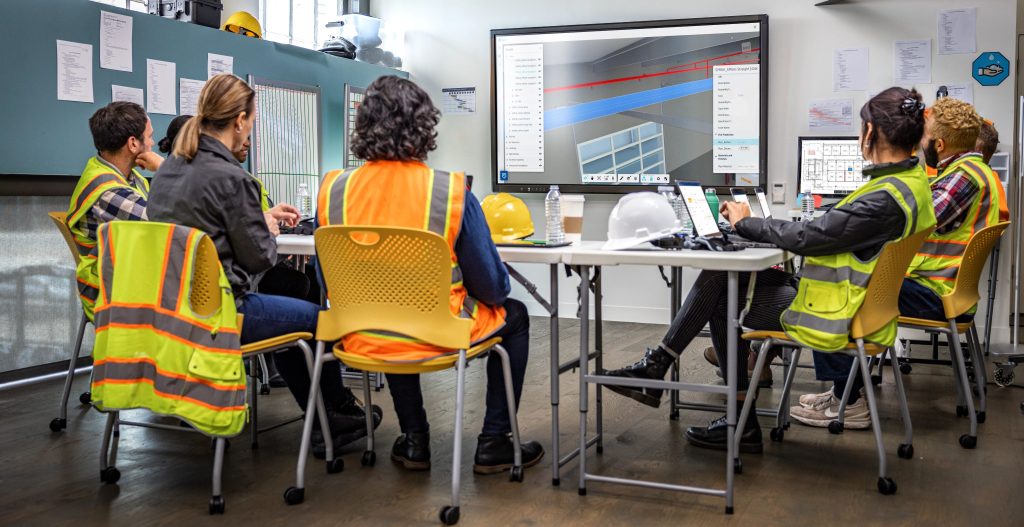
That means learning needs to go beyond understanding the software to applying in practice. People need opportunities to work with realistic requirements, understand the information others need from them and see the consequences of their decisions.
What this looks like will be different depending on the role performed in the workplace. A modeller, a BIM coordinator and an information manager will need different combinations of technical knowledge, practical experience and professional judgement. What matters is that each person can apply their skills effectively within their role and understand how that role connects to others.
Making learning more practical
So how do we help people make that transition from knowing BIM to doing BIM? What can we learn from the practices we see on a daily basis across the Autodesk Learning Partner network?
Make learning reflect real project conditions. Rather than focusing exclusively on individual tasks, introduce scenarios that require learners to interpret a brief, work with project information and produce a deliverable that meets defined requirements. Give them the opportunity to deal with the sort of challenges they are likely to encounter at work.
Build collaboration into the learning experience. BIM relies on people working across disciplines and sharing information effectively. Learning activities that involve coordination, information exchange and reviewing other people’s work can help develop an understanding of the wider project process, not just an individual’s contribution.
Assess what people can do, not simply what they know. Completing a course or passing an assessment provides useful evidence of learning. But employers also need to understand whether people can apply their skills independently, solve problems and adapt when project requirements change. Practical exercises, project-based assessments and feedback from the workplace can all help build that picture.
The key here is connecting product learning and understanding to the work people are expected to do.
Capability is an ongoing process
We’ve all seen how the digital technologies are transforming how we live and work – new tools and platforms are coming online on a weekly (or even daily basis)!
The same goes for BIM. It is evolving, and the capabilities needed to use it effectively will continue to change.
As workflows become more connected and AI and automation introduce new possibilities, people will need to keep learning, questioning established approaches and adapting their skills. Developing capability cannot be treated as a one-off event.
This is where collaboration between employers, educators and Autodesk Learning Partners has an important role to play. Training providers bring technical expertise and teaching experience, while employers understand the demands of their projects and the capabilities their teams need. Bringing together those perspectives and experiences helps make learning more relevant to the work people actually do.
At the end of the day, people need to put knowledge to work: applying it to project requirements, collaborating with others, solving problems and contributing to better outcomes.
A challenge for employers
And that raises some questions you might want to consider.
When someone returns from training, do they have the opportunity to apply what they’ve learned? Are they working on projects that stretch their skills? Do they have the support to experiment, solve problems and learn from experience? And are you looking at the impact their developing capabilities have on project delivery?
Closing the BIM capability gap is partly about training. But it is also about making sure that people know what to do with that learning – particularly when they’re under pressure. The learning needs to translate into better ways of working, stronger collaboration and improved project outcomes.
That’s when we’ll move beyond knowing BIM to doing BIM.

Tomas Karlsson is the head of global services at KnowledgePoint. This means he oversees the management, growth and delivery of learning and partner networks for organisations such as Autodesk. He and his team provide operational support, recruit and enable global networks of training providers, and assure high quality delivery and learner experiences.