
 Written by
 From assignment to application: preparing students for the reality of work
It’s that time of year. For the last few weeks, universities and colleges around the world have opened their doors to a new academic year or semester.
Millions of students are navigating unfamiliar territory – new programmes of learning, campuses and friendships. They’re following their timetables, looking at where their studies are going to take them in the coming months and years. They are embarking upon a cycle of lectures, seminars, practical sessions and assignments.
These are all carefully curated and designed by their faculties, professors and tutors to help them develop the skills and gain the knowledge they’ll need for their future careers.
In our line of work, we talk a lot about capability – the distinction between having skills, and being able to apply them in real-world settings.
Colleges and universities give students the knowledge and technical skills they need to begin their careers. But I remember walking into my first job and realising that, despite years of study, I wasn’t fully prepared to apply what I’d learnt. I had the knowledge and skills, but I was still learning how to put them into practice.
Professional practice asks students to do something different: apply that knowledge to an unfamiliar problem, make choices, work with others and deliver an outcome.
That’s why another kind of learning is important as students move forward: learning what to do when there isn’t always a prescribed answer.
I’d put it as, knowing something and being able to apply it are not quite the same thing.
How can education reflect what happens in the real world?
Much of our work is linked to design and make industries – construction, architecture, manufacturing, media and the like. We know those employed in design and engineering disciplines don’t generally receive neatly bounded assignments.
They often work with ambiguity and with briefs open to interpretation – but they’re expected to deliver a precise and reasoned response. They may face:
- An objective, rather than a prescribed answer
- Competing requirements and constraints
- Incomplete or changing information
- Different perspectives and priorities
- New and evolving technologies
- Decisions that require judgement
- An outcome that must work in practice
From an educational perspective, how do we give students opportunities to explore that kind of thinking before they enter the workplace?
One answer is to give students problems to solve, rather than exercises to complete. Thousands of students who took part in the Designathon and Buildathon student challenges in recent months have had an opportunity to do just that. By taking on an additional challenge beyond their usual studies, they’ve been able to put their learning into practice and develop capabilities they’ll need in their future careers.
Whilst the Designathon and Buildathon are for students from different disciplines, tackle different challenges, and use different technologies, they both set the foundations for a fundamental shift. Students are required to move from demonstrating knowledge to applying knowledge.
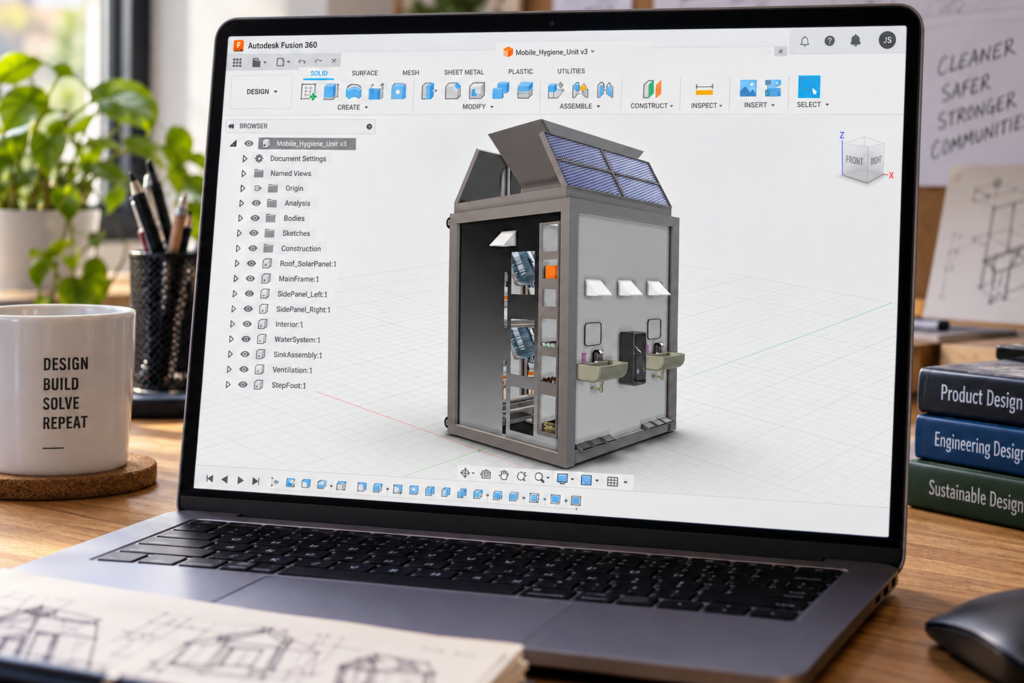
In the Designathon, industrial design and engineering students worked in teams using Autodesk Fusion to solve an industrial design challenge. In the latest edition (number 4!), they were asked to respond to a design brief for a mobile hygiene unit for use in disaster recovery settings.
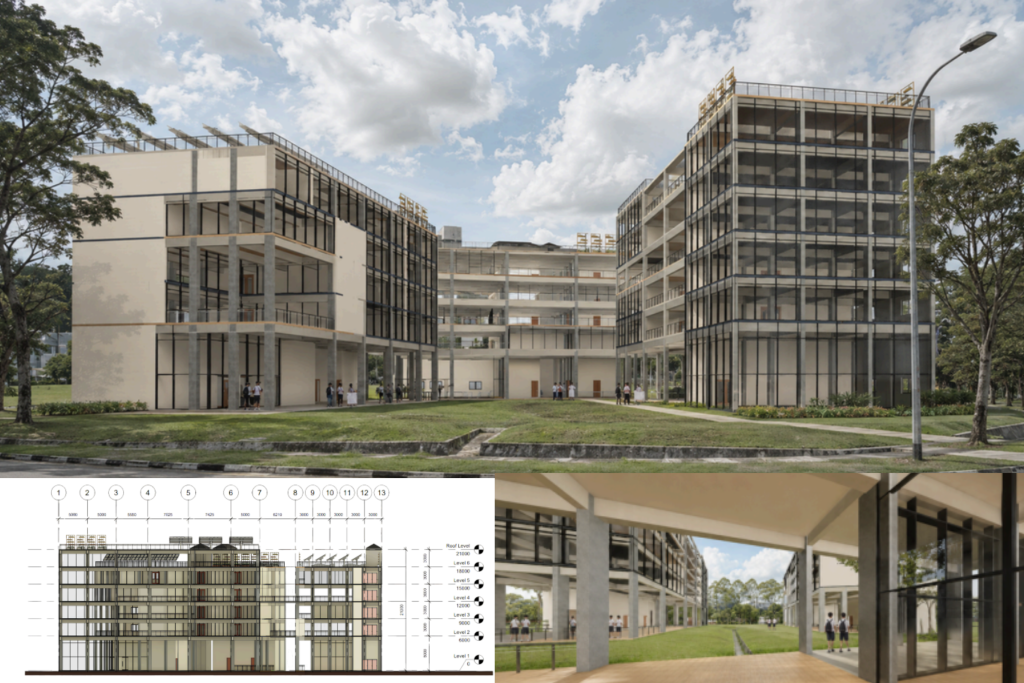
Students from built environment disciplines – construction, engineering, architecture and the like – used Autodesk Revit and Forma Site Design as part of the Buildathon challenge. They were “commissioned” to design a Digital Learning and Innovation Hub on a site of their choosing. They needed to work together to design such a building – with design decisions supported by environmental analysis.
What changes when students take part in such a challenge?
Challenges like these change the role students need to play. Rather than following a prescribed process to reach a known answer, students must make and justify decisions for themselves. They need to interpret the brief, work out what they know and what they need to learn, and decide how to approach the problem.
As they develop their ideas, they encounter the kinds of decisions, compromises and setbacks that are part of professional practice.
The challenges call upon them to:
- Interpret – what is the problem really asking?
- Explore – which possible solutions could work?
- Decide – which approach best meets the requirements – and why?
- Iterate – how can we test, learn and improve?
- Collaborate – how do we take into account different perspectives and skills, how do we work effectively as a team?
- Apply – how does technology help us to develop and test our ideas?
- Communicate – how can we explain and justify our solution?
The process of the responding to a brief offers value alongside the outcome. Students have to make choices, explore different approaches and work through the consequences of their decisions. They learn to deal with uncertainty, recognise when an idea needs to change and consider how well their solution meets the brief.

The experience gives them an opportunity to put their knowledge into practice, rather than simply demonstrate what they know.
These are capabilities students will draw on throughout their careers, whatever discipline they enter. Technology will continue to evolve, and the problems people face at work will change with it. The ability to learn, adapt, think critically and work with others gives students a foundation for navigating that change.
How can educators make these capabilities part of the learning experience?
Technical proficiency remains essential. But students also need opportunities to put their knowledge into practice, exercise their judgement and take responsibility for developing a solution. Challenges such as the Designathon and Buildathon give them a chance to practise these capabilities in a setting that reflects aspects of professional life.
They’re a way to create more space for students to work through problems where the answer isn’t already known. This doesn’t mean replacing structured teaching or technical exercises. They offer a means of complementing them with opportunities for students to make decisions, test their thinking, learn from what doesn’t work and explain the reasoning behind their solutions
They connect it to what comes next. They offer students opportunities to move between knowing, trying, applying and adapting. The closer those experiences come to the ambiguity and collaboration of professional practice, the more valuable they are.
Perhaps the question at the start of an academic year or a new semester shouldn’t just be “what will students learn?” but “how will they learn to apply what they know?”

Tomas Karlsson is the head of global services at KnowledgePoint. This means he oversees the management, growth and delivery of learning and partner networks for organisations such as Autodesk. He and his team provide operational support, recruit and enable global networks of training providers, and assure high quality delivery and learner experiences.
If you’d like to explore how student competitions like the Designathon and Buildathon, are planned and delivered – or find out how you can get involved in future events – Tomas and his team at KnowledgePoint would be happy to chat.