 Written by
 The 2026 Designathon challenge itself is now over. The two-day online event ran smoothly – the student teams learnt new skills, developed their concepts and submitted their responses to the brief.
Judging is already underway. Hundreds of submissions are being reviewed against agreed criteria – our expert jury drawn from industry and learning are considering the strengths of each entry and evaluating them against a defined marking rubric. We’ll announce the winners in August.
For the students who took part, the focus has shifted from creating their concepts to reflecting on their learnings, adding their projects and their certificates to their portfolios – and the wait for the winning teams to be announced!
For the Designathon organising team at KnowledgePoint, an enormous thank you for getting us to this point – for registering teams, for designing the challenge, for working with partners and for creating engaging promotional content.
They know, though, there is still a lot to do.
As we move into the next phases of the programme, we’re also taking the time to reflect. This process of continuous reflection and learning is vital for me and my team – and the quality of the services we provide to our clients.
While a student competition could appear, from the outside, to be a relatively straightforward concept – set a challenge, invite students to participate, and choose a winner – delivering a successful competition is considerably more complex.
A lot of work happens behind the scenes. Let me lift a lid on some of what goes on.
A competition is more than a competition
The Designathon is, of course, a competition. Importantly, it is also a learning experience – a skills development opportunity, a way for students to signal their skills to industry, and a chance to connect students, educators, training organisations and industry experts across different markets.
That means success can’t be measured solely by the quality of the winning submissions.
It is also about how students engage. Whether they have access to the right preparation and support. Whether partners are equipped to help them participate. Whether the challenge is relevant and meaningful. Whether the organising company (Autodesk in this case) and the sponsors realise value. And whether the experience leaves students with something they can take forward into their education and careers.
These factors need to come together in how we plan and deliver such an event. As we know from experience, that starts well before the competition itself.

Delivering value across the ecosystem
Of course, a student competition needs to benefit students taking part – that is critical. It also needs to deliver more broadly.
Students need an experience that is engaging, relevant and worthwhile. Educational institutions need something which complements their curricula and programmes of learning. Partners need the information, resources and support to engage their communities effectively. Sponsors need to see value from their investment. And the organising company needs to achieve the objectives that led it to create the competition in the first place.
If students don’t see the value, engagement suffers. If institutions and partners aren’t equipped to support participation, reaching students becomes harder. If the experience isn’t relevant to the brand’s objectives, the competition risks becoming a standalone initiative rather than contributing to a wider strategy.
So, creating value for each audience needs to be considered from the outset.
Given the timing of this piece, I have the Designathon front-of-mind, but the principles apply more broadly. In planning and execution, we think beyond the two-day competition itself – considering the experience before, during and after the event.
We needed to connect different parts of the ecosystem – giving students the opportunity to learn and demonstrate their capabilities, helping institutions engage with industry, enabling partners to support their communities, and giving Autodesk and its sponsors an opportunity to connect with the next generation of designers and engineers.
Students had access to self-study resources and preparatory training. Student experts shared advice and demonstrated key workflows. Autodesk Learning Partners provided tailored support in their markets. The competition itself combined learning with challenge, giving students the opportunity to develop their skills and then put them into practice.
Making all these elements work together requires careful planning, clear communication and a strong understanding of what each stakeholder needs from the experience. It also requires the flexibility to adapt as the programme develops and new needs emerge.
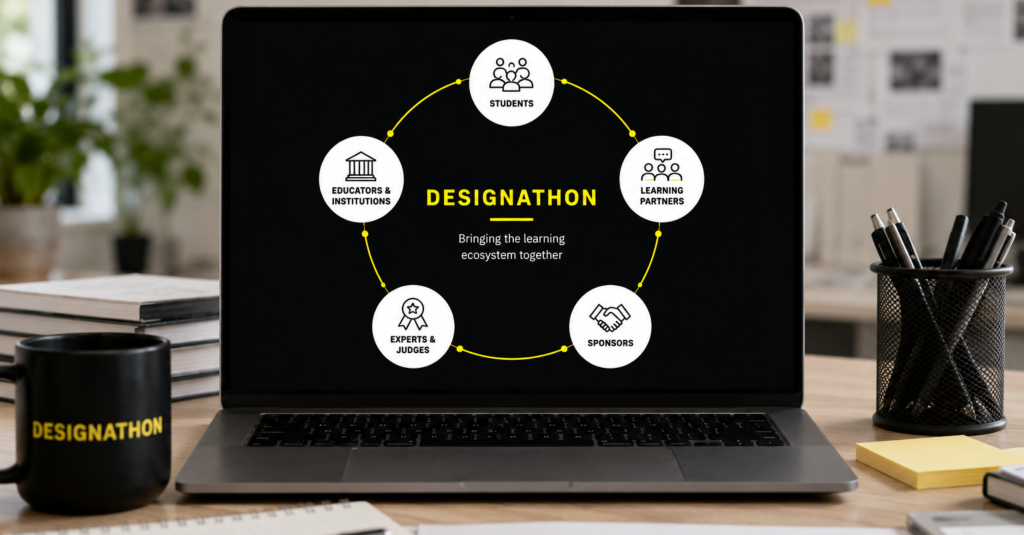
In our experience, that’s what turns a competition from a standalone event into a meaningful programme – one where the different parts reinforce each other, and where the value extends well beyond the final submissions.
Designing and judging to defined criteria
The judging process and criteria require careful planning. The criteria we use to assess the submissions define what we want students to focus on as they work through the challenge.
Are we looking for technical excellence? Creativity? Feasibility? The ability to interpret a brief? The quality of the final presentation? Or a combination of these things?
We give participating teams a clear understanding of what is expected, while a marking rubric gives the jury a consistent basis on which to assess submissions. It also helps to ensure that the competition delivers against the wider objectives of the programme – from developing skills and encouraging creativity to strengthening connections between students, education and industry.
The judging process therefore plays an important role in the overall value of the Designathon – and competitions in general. It helps students understand what good looks like, gives educators and partners a clear framework for supporting participation, and provides Autodesk and its sponsors with confidence that the competition is delivering against its purpose.

And, of course, it needs the right people behind it.
Our expert jury brings the technical knowledge, industry experience and different perspectives needed to assess the submissions. The organising team provides the structure, briefing and coordination to ensure that expertise is applied consistently and effectively.
Together, these elements help make sure that the final outcome is about more than selecting the winners. It is about recognising the qualities and capabilities that the Designathon is designed to develop – and celebrating the students who demonstrate them.
The operational details matter
The operational details are the engine room of a competition like the Designathon.
Managing registrations. Keeping students and partners informed. Coordinating communications. Tracking engagement. Supporting training activity. Answering questions. Managing timelines. Preparing judges. Reviewing submissions. Keeping everyone aligned when there are multiple organisations, countries and stakeholders involved.
In isolation they could seem simple to deliver. Together, they make the difference between an initiative that simply happens and one that works.
It requires clear ownership, reliable processes and, perhaps most importantly, the ability to respond when things don’t go exactly to plan.
A successful programme needs enough structure to keep everyone moving in the same direction, but enough flexibility to adapt as circumstances change.
That is particularly true when working across multiple organisations and markets. It means keeping sight of the bigger picture while managing the detail – and making sure that all the different parts of the programme continue to work together.

Learning from every cycle
One of the benefits of running a competition year after year is that every edition provides an opportunity to learn.
What worked well? Where did participants need more support? Which communications generated the strongest engagement? Where did partners need additional guidance? What could be made simpler, better or clearer?
These insights can then be used to shape and improve the next iteration.
In that sense, a successful competition is never really a finished product – it is an evolving programme.
Each cycle builds on the last, strengthening the participant experience, refining the operational model and helping everyone involved understand what makes the programme more effective.
That continuous improvement is particularly important when the ambition is to grow. But growth isn’t just about more students, more institutions, more countries and more partners. It is about maintaining – and improving – the quality of the experience and the learning that students, partners, sponsors and organisers can take forward.
What happens next?
For now, the Designathon team is focused on the judging process and preparing to announce the winners in August.
There will be standout ideas to celebrate, stories to share and achievements to recognise. Announcing the winners also brings another phase of organisation – delivering the prizes and learning experiences on offer to the winning teams.
But the real impact of a programme like this goes beyond the winning teams.
It is in the students who have developed new skills. The teams who have learnt how to collaborate under pressure. The educators and partners who have supported their participation. The connections made between education and industry.
When initiatives like this are well designed and well delivered, they can become much more than a competition. They can create meaningful learning experiences, strengthen communities, develop industry-relevant skills and give students the opportunity to demonstrate what they can do.
The challenge may last two days.
But creating the right conditions for those two days – and making the experience valuable before, during and after the event – takes much more.
It takes thoughtful programme design, strong partner engagement, careful coordination and a willingness to keep learning and improving.
That is the work behind the competition.
And it is often what determines whether an initiative becomes a one-off event or a meaningful, scalable programme that delivers value for everyone involved.

Tomas Karlsson is the head of global services at KnowledgePoint. This means he oversees the management, growth and delivery of learning and partner networks for organisations such as Autodesk. He and his team provide operational support, recruit and enable global networks of training providers, and assure high quality delivery and learner experiences.
If you’d like to explore how an annual initiative like the Designathon, is planned and delivered, Tomas and his team at KnowledgePoint would be happy to chat.