
 Written by
 For years, we’ve faced a familiar challenge: students can demonstrate technical understanding in the classroom, yet often struggle to apply that knowledge in realistic project environments. We see that across roles, workplaces and industries.
Those students seeking careers in the architecture, engineering, construction and operations (AECO) sector, often understand BIM (Building Information Modelling) and BIM workflows conceptually. They know how to model, coordinate or document a project. But can they apply those skills under pressure – all while balancing sustainability, performance and outcomes requirements?
As the built environment becomes more complex, the need to address that gap between theory and practice becomes more acute.
As educators we’re here to prepare our students to be future AECO professionals. They’ll be expected to design and deliver projects, and to prepare for and understand outcomes. Building and infrastructure projects must perform environmentally, operationally and socially. Design decisions are increasingly informed by data, simulation and analysis early-on in projects. Project teams are expected to iterate quickly, justify decisions clearly and collaborate across disciplines – often with teams outside their own organisation.
This all means we’re preparing students to make informed decisions in complex, often pressurised and fast-moving environments.
We have a responsibility to prepare them to flourish in such situations.
The evidence for competition-based learning
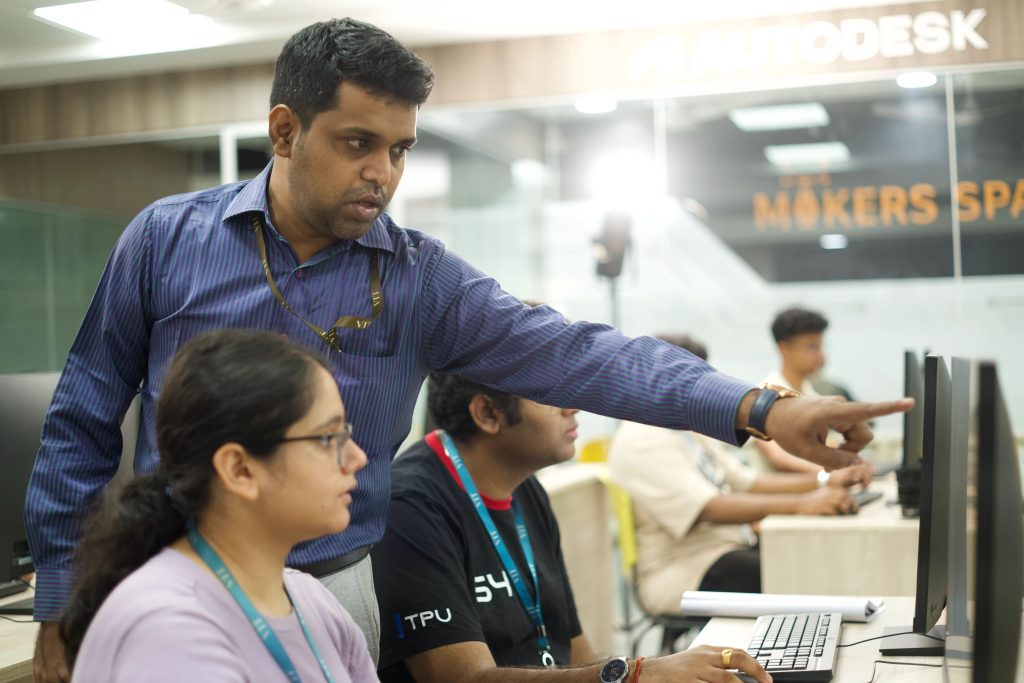
From engineering to healthcare, and from business to computer-science, challenge-led and competition-based learning models are recognised for their ability to bridge theory and practice. Students are required to apply knowledge actively rather than reproduce it passively.
I recently authored a paper in the International Journal of Construction Education and Research about implementing competition-based learning (CBL) in higher education programmes and its impact on student engagement and performance. It highlights how CBL can improve student engagement, boost knowledge retention, help students to grasp complex concepts and improve employability outcomes.
The educational theorist David Kolb’s work on experiential learning talks about how meaningful learning occurs through experience, reflection, conceptualisation and experimentation. Indeed, he describes the ideal process of learning in a four-step Experiential Learning Cycle: Experiencing – Reflecting – Thinking – Acting.
Competition formats recreate those cycles. Students must formulate ideas, test those ideas, analyse, iterate and reflect on outcomes in real time. Given the requirements of future roles, challenge-based and competition-based learning are particularly effective for applied disciplines such as AECO education.
From software literacy to performance literacy
Outcome-based BIM requires students to think beyond the tool towards evidence-based decision-making. They must learn to defend design choices using analysis rather than aesthetics or preference. Why is one massing option more sustainable than other? How does a change in orientation affect operational performance? What are the trade-offs between user experience, energy efficiency and buildability?
These are the types of questions and decisions made by AECO professionals each and every day.
Competition-based learning offers a pedagogical bridge between theory and practice. Intensive design challenges such as the Buildathon compress many of the realities of practice into a focused learning experience. Students are required to work collaboratively, interpret a brief, respond to constraints, analyse data and communicate their decisions – and all within time constraints.
In doing so they begin to develop what could be described as “performance literacy” – the ability to understand, evaluate, interpret and communicate how design decisions influence required (and measurable) outcomes. They go from designing around taste to designing intelligently.
They soon realise strong ideas alone are not sufficient – and that they need evidence and iteration. They learn they need to be able to demonstrate why one solution performs better environmentally, operationally or socially, than another. They start to develop a mindset which is aligned with industry expectations where data-informed design and outcomes are central to project delivery.
A format reflecting reality

Short-duration, high-intensity competitions reflect many of the pressures students will encounter in practice. Working within tight timeframes forces prioritisation, communication and rapid iteration. It also encourages students to think about decision-making and adaptability – rather than perfection.
As team-based initiatives they also reflect reality – much more so than traditional assessment models. In practice, architects, engineers and contractors rarely work in isolation. Projects are made up of many collaborating parties – they depend on communication, negotiation and shared problem-solving. We recreate this by asking students to participate in teams, helping them to develop critical interpersonal skills alongside technical skills and knowledge.
They’re also using platforms and tools they would be expected to use in professional practice. In the Buildathon, they’re using Autodesk platforms such as Forma, Revit and Insight and using the same workflows used across the AECO sector.
They’re using digital workflows to evaluate performance, communicate decisions and solve problems. They begin to understand that successful design is not only about creativity or technical accuracy, but about delivering better outcomes.
Embedding competition-based learning into teaching
In my opinion, competition-based learning is the perfect complement to other aspects of my learning delivery. There’s benefit to be derived from introducing competition briefs into modules as project exercises, interdisciplinary workshops or enrichment activities. I support students for external competitions through preparatory sessions – for example on sustainability analysis, collaborative workflows or presentation techniques.
Students can also use competitions to bolster their portfolios. Students who can demonstrate how they used analysis to improve a design solution can present much stronger evidence of industry readiness than a portfolio solely built around visual outputs.
Competitions shouldn’t be viewed as separate from learning. They’re an extension of it – and also an important bridge between knowledge and professional delivery.
Buildathon 2026 – get involved
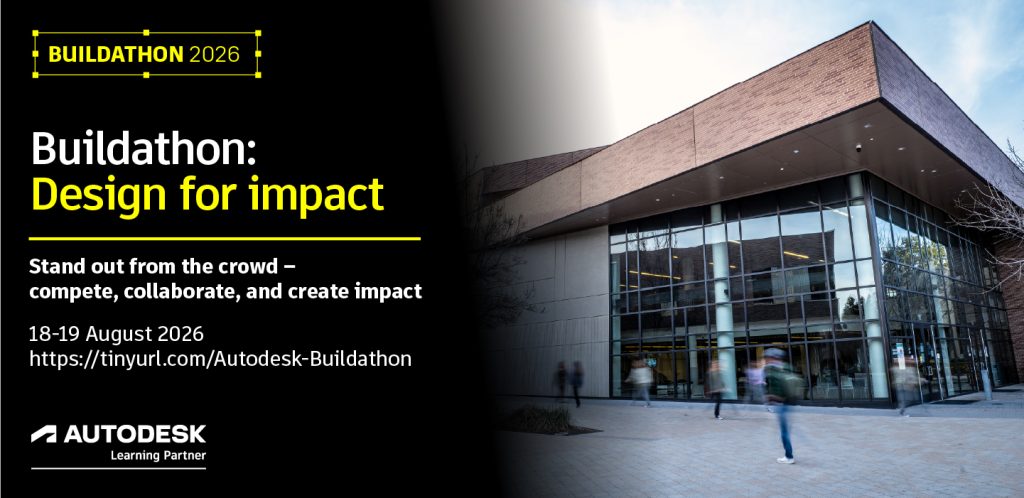
Competition-based learning works because it creates conditions where knowledge must become action. As an educator preparing the next generation of AECO professionals, that’s a responsibility I take seriously.
I’d encourage my peers to look at what competition-based learning can offer – and specifically the Buildathon if they want a ready-made solution for their students in AECO-related disciplines.
The Buildathon offers a space where students can test themselves, learn from each other, and practice what they’ve learnt. They’ll be competing against student teams around the world – and there are some fantastic prizes on offer, all designed to support their future employability.
You can find out more and teams can sign up here https://tinyurl.com/Autodesk-Buildathon
The Buildathon: Design for impact takes place on 18-19 August 2026. Students gain hands-on experience of solving a real-world challenge using Autodesk tools such as Forma, Revit and Insight. The global competition is designed to foster teamwork, creativity and data-driven decision-making. Students develop industry-ready skills in digital design, environmental analysis and collaboration.