
 Written by
 Why digital capability—not technology—is becoming the key driver of success in complex infrastructure programmes.
Late last year, I travelled to Marrakesh for a meeting with Autodesk Learning Partners from across the region. One of the discussions focused on the scale of infrastructure investment in Morocco — from the Tiznit-Dakhla expressway to the White Dunes Green Hydrogen project and preparations for the 2030 FIFA World Cup.
These initiatives are not simply defined by individual projects, but by interconnected systems and requirements. From cross-border rail corridors and airport expansions to energy networks and urban regeneration programmes, these investments are designed to reshape economies — not just deliver assets.

Large-scale infrastructure projects are increasingly interconnected, requiring coordinated planning across systems, disciplines and regions.
Beyond Morocco, similar examples can be found across the region.
The Lobito Corridor — a 1,300km rail and logistics network linking Angola, the DRC and Zambia — is designed not just to connect locations, but to unlock regional trade and resource flows. The expansion of Etihad Rail and the wider GCC railway network is creating a connected logistics backbone across the Gulf, linking ports, cities and industrial zones.
On projects of this scale, decisions made on site can have far-reaching implications — not only for timelines and budgets, but for cross-border coordination and long-term economic outcomes.
If the right insight isn’t readily available, the consequences can be significant.
The Digital Transformation Gap Is Human, Not Technical
Investment in digital transformation across the AECO sector continues to grow. BIM, data platforms and connected workflows are increasingly being adopted as standard.
Yet, as highlighted in our BIM Realities report, nearly 70% of organisations still struggle to realise their digital transformation ambitions.
The challenge is not technological — it is human.
The success of these projects depends on having the right skills, knowledge and confidence to use digital tools effectively.
From Coordination to Decision-Making
For many organisations, BIM adoption has focused on improving coordination — better models, fewer clashes and more efficient delivery.
While these benefits remain important, they represent only part of the value.
Across the BIM Realities stories and beyond, we see how teams with strong digital capability are beginning to influence decisions, not just coordinate work.
As teams build confidence with BIM, they identify constructability challenges earlier. Instead of resolving issues during delivery, they feed insights back into design — reducing rework and influencing sequencing decisions.
Contractors working in complex infrastructure environments use coordinated digital models to improve communication between design and site teams. This enables faster, clearer and more confident decision-making.
These are not marginal gains. They represent a fundamental shift in how decisions are made.
Connecting Site Intelligence to Programme Strategy
The implications of this shift are particularly significant in large programmes, where complexity is driven not just by scale, but by interdependence.
Delivery is distributed across geographies, organisations and disciplines. Decisions made in one location — whether related to sequencing, logistics or design — can have consequences across entire regions.
This makes the flow of information critical.

Real-time site insights enable faster, more informed decision-making across project teams.
Structured digital workflows create a feedback loop between site and strategy. Shared models, data capture and common standards allow insights from delivery to be communicated effectively to planners, designers and programme leaders.
This improves visibility of risk, enabling issues to be identified earlier and addressed more proactively. Leaders can make better-informed decisions, with confidence that the data reflects reality on site.
Enabling Coordination Across Complex Ecosystems
Large-scale programmes are rarely delivered by a single organisation. They rely on networks of clients, contractors, consultants and supply chain partners — often operating across different countries, standards and ways of working.
BIM provides the technical foundation, but success depends on people having the skills to operate effectively within that framework.
When teams are aligned in both tools and workflows, they can collaborate across organisational boundaries — ensuring consistency, coordination and alignment.
Digital skills act as a unifying force, enabling diverse teams to operate as a connected system rather than a collection of disconnected parts.
From Capability Building to Strategic Advantage
If digital skills enable better decisions and stronger coordination, the next question is how organisations build this capability at scale.
Structured, intentional skills development is a key part of the solution.
Organisations move beyond ad hoc training to defined learning pathways, embedding knowledge across teams rather than relying on a small number of specialists.
When individuals understand not just how to use BIM, but how their work connects to wider programme goals, they are able to contribute more meaningfully.
At this point, capability building becomes a source of strategic advantage.
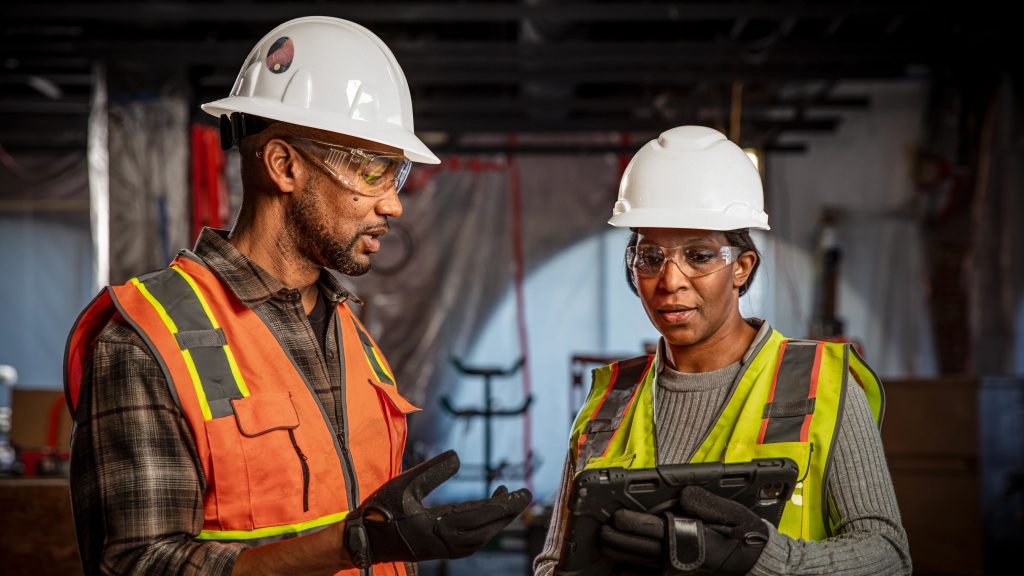
Skilled teams are the foundation of digital transformation, enabling collaboration, coordination and better project outcomes.
Bridging the Gap Between Delivery and Intent
Digital skills are becoming a critical bridge between site and strategy — enabling better decisions, stronger collaboration and more resilient outcomes.
Organisations that invest in structured capability building don’t just improve project delivery — they ensure that site-level insight informs strategic planning and decision-making.
Where site insight informs strategy, projects adapt and perform.
Where it does not, issues surface too late — and at greater cost.
We will know soon enough whether major projects are delivered on time and on budget. The real question is whether they will deliver the wider impact they promise.
Tomas Karlsson
Head of Global Services, KnowledgePoint
Tomas Karlsson is the head of global services at KnowledgePoint. This means he oversees the management, growth and delivery of learning and partner networks for organisations such as Autodesk. He and his team provide operational support, recruiting and enabling global networks of training providers, assuring high quality delivery and learner experiences.